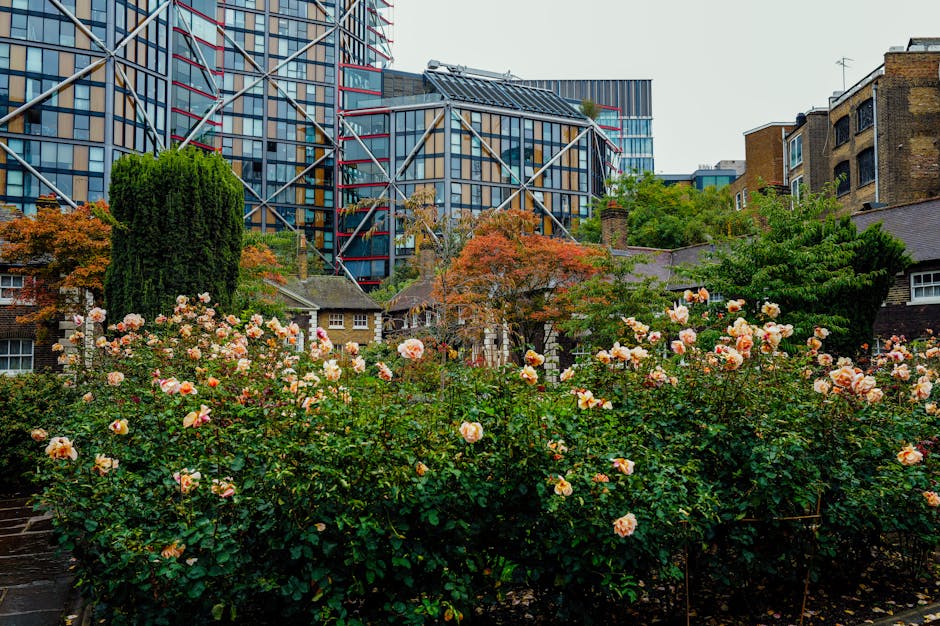
Whitechapel garden maintenance near Aldgate East station: a practical guide for busy London gardens
If you're looking into Whitechapel garden maintenance near Aldgate East station, chances are your outdoor space needs regular care, not a once-a-year tidy-up that barely scratches the surface. Maybe it's a small courtyard that gathers leaves fast, a shared back garden that gets tired quickly in the city, or a front patch that should look welcoming but somehow never quite does. That's very normal in this part of London.
Between the foot traffic, pollution, shade from tall buildings, and the stop-start weather we all know too well, gardens around Whitechapel and Aldgate East can change quickly. This guide walks you through what garden maintenance actually covers, how the service works, what to expect, and how to choose the right approach for your space. It also includes a checklist, common pitfalls, and practical advice for getting a result that looks cared for rather than simply "cut back".
Truth be told, a good garden rarely happens by accident. It's usually the result of regular attention, a sensible plan, and a bit of local know-how.
Table of Contents
- Why Whitechapel garden maintenance near Aldgate East station Matters
- How Whitechapel garden maintenance near Aldgate East station Works
- Key Benefits and Practical Advantages
- Who This Is For and When It Makes Sense
- Step-by-Step Guidance
- Expert Tips for Better Results
- Common Mistakes to Avoid
- Tools, Resources and Recommendations
- Law, Compliance, Standards, or Best Practice
- Options, Methods, or Comparison Table
- Case Study or Real-World Example
- Practical Checklist
- Conclusion
- Frequently Asked Questions
Why Whitechapel garden maintenance near Aldgate East station Matters
Garden maintenance in Whitechapel is about far more than keeping grass short or trimming a hedge now and then. Near Aldgate East station, outdoor spaces are often compact, partially shaded, shared, or exposed to extra urban wear. A neglected garden can turn into a slippery, cluttered, overgrown corner faster than many people expect. One damp week, a few windy days, and suddenly there are weeds in the paving, moss on the path, and planting that looks half-finished.
For homeowners, landlords, property managers, and businesses, regular maintenance does three important jobs. It protects the condition of the garden, keeps the space usable, and helps the whole property feel looked after. That last part matters more than people sometimes admit. A neat front garden or courtyard makes a stronger first impression, and in dense London areas, that impression is often made in a matter of seconds.
There is also the practical side. Regular care is usually easier and more cost-effective than letting a garden decline and then paying for a major reset. A reset can be useful, sure, but it's not the same thing as ongoing upkeep. Maintenance keeps the work manageable. Small jobs stay small. Big problems don't get the chance to grow teeth.
If you manage several outside spaces, it can help to think of maintenance as part of a broader property care plan alongside garden clearance services and hedge trimming. That way the garden does not become an afterthought. It becomes part of the property's regular rhythm.
How Whitechapel garden maintenance near Aldgate East station Works
Garden maintenance usually starts with a site visit or a simple discussion about what the space needs. In a busy area like Whitechapel, the garden might be a tiny rear yard, a communal courtyard, a roof terrace, or a narrow strip of planting beside a building. The work should be shaped around that reality, not forced into a one-size-fits-all schedule.
A proper maintenance plan often includes some combination of the following:
- lawn mowing and edging
- weeding beds, borders, paving, and gravel
- hedge cutting and shrub shaping
- deadheading and light pruning
- leaf clearance and debris removal
- pressure washing or path cleaning where suitable
- planting care, watering, and seasonal tidy-ups
- basic plant health checks and replacement recommendations
In practice, the exact mix depends on the season, the size of the garden, and how much time has passed since the last visit. Spring and early summer often need more active growth control, while autumn tends to bring leaf fall, damp surfaces, and a very determined layer of mess that seems to appear overnight. Winter maintenance is usually lighter but still useful, especially for safety, shape, and structure.
Good maintenance providers also think about access. In streets around Aldgate East, tools may need to be carried through tight entrances, shared walkways, or basement access points. That sounds minor, but it affects timing, noise, and the way work is organised. A careful team will plan around neighbours, bins, parking, and building rules. That sort of thing sounds unglamorous, but it makes a huge difference.
If the garden needs more than routine care, you may also want to combine maintenance with regular garden maintenance or a one-off garden design service to improve structure, planting choice, and long-term ease of care. Sometimes a small redesign saves a lot of future effort. Not always, but often enough to be worth considering.
Key Benefits and Practical Advantages
The real value of regular garden maintenance is not just visual. Yes, a tidy garden looks better. But the practical benefits go further than that.
- Better plant health: Regular pruning, feeding, and weeding reduce stress on plants and stop smaller issues from spreading.
- Safer outdoor spaces: Clearing wet leaves, moss, and overgrowth helps reduce slips, blocked paths, and hidden hazards.
- Less long-term cost: Ongoing care is usually cheaper than dealing with an overgrown garden that needs a full recovery.
- More usable space: A well-kept garden is actually pleasant to sit in, not just something to look at through the window.
- Stronger property presentation: Especially useful for rental homes, commercial entrances, and shared residential spaces.
- Seasonal resilience: Gardens maintained regularly tend to cope better with heavy rain, dry spells, and sudden temperature swings.
There's also a quieter benefit: peace of mind. When a garden is under control, you stop noticing all the little things that used to niggle at you. The broken feeling goes away. You walk outside, glance around, and think, yes, this is alright. That feeling is worth a lot, actually.
For landlords and managing agents, maintenance can also support quicker turnaround between tenancies and reduce complaints about untidy shared spaces. If that matters to you, it may be worth pairing ongoing visits with support from property maintenance so the outside area stays in step with the rest of the building.
Who This Is For and When It Makes Sense
Garden maintenance near Aldgate East station makes sense for a fairly wide range of people, and not just those with large gardens. In fact, some of the most maintenance-hungry spaces are the smallest ones. A compact courtyard can become messy faster than a larger plot because every leaf, weed, and pot arrangement is right there in your face.
It is especially useful for:
- Busy homeowners who want the garden to stay presentable without spending weekends catching up
- Landlords who need exterior spaces to support tenant appeal and property value
- Residential block managers responsible for communal planting and shared outdoor areas
- Local businesses with frontage planting, small courtyards, or customer seating areas
- Older residents who want help with work that has become physically awkward or unsafe
- New movers who have inherited a garden that needs a reset and a routine
It also makes sense when the garden is not "bad" exactly, just getting away from you. That is a very common stage. The grass is fine, but too long. The borders are okay, but the weeds are winning. The patio is usable, but only if you ignore the moss. You know the sort of thing.
If you are unsure whether you need a one-off tidy or regular visits, that is a good sign to talk through the space in detail. A simple maintenance plan can often be shaped around what the garden actually needs, rather than what a generic service pack says it should need.
Step-by-Step Guidance
If you want to get the best result from garden maintenance, it helps to think in stages. The process is usually straightforward, but the quality of the outcome depends on what happens before, during, and after the work.
1. Assess the garden honestly
Walk through the space and look at what is really happening. Which areas get the most shade? Where does water sit after rain? Which plants are doing well, and which ones are hanging on by a thread? An honest assessment saves time later.
It helps to take a few photos in daylight. Nothing fancy. Just enough to show problem areas clearly.
2. Separate routine maintenance from bigger issues
Routine maintenance covers ongoing work such as mowing, weeding, pruning, and clearance. Bigger issues might include damaged paving, failed fencing, poor drainage, or a planting scheme that no longer suits the site. Mixing those together without a plan can lead to muddled priorities.
If the garden has structural problems, maintenance alone will not fix them. It can help, but not magic them away. Sad, but true.
3. Decide how often the garden needs attention
Some spaces need weekly or fortnightly visits in spring and summer. Others do well with monthly care and a more intensive seasonal tidy. The right frequency depends on growth rate, use, and budget. In Whitechapel, where urban conditions can be variable, it is often better to start with slightly more regular visits and reduce later if the garden proves stable.
4. Agree what is included
Clarity matters here. A proper agreement should spell out what is included, what is extra, and what needs separate approval. For example, light pruning may be included, while removal of large amounts of green waste or specialist tree work may not be.
This is where a service like landscaping can be useful if the garden needs more than upkeep. Maintenance keeps things going; landscaping changes the shape of the space.
5. Carry out the work in a sensible order
A good order usually starts with clearing, then cutting, then shaping, then detailed tidying. That way the garden is not polished too early and then damaged by later work. Any waste should be removed cleanly, paths swept, and finish points checked before the team leaves.
6. Review and adjust
After the first visit or two, review what is working. Is the schedule right? Are certain beds always overgrowing? Do some areas need more watering, mulching, or shade-tolerant planting? A good maintenance plan should adapt. Gardens change. People forget that. Plants do not sit still because the calendar says so.
Expert Tips for Better Results
A few small decisions can make maintenance much more effective. These are the kinds of details that often separate a garden that merely looks neat from one that looks healthy and easy to live with.
- Mulch bare soil: It helps suppress weeds and keeps moisture in the ground for longer.
- Use the right plants for the site: Shade-loving plants in shaded spots, tougher species near exposed edges, and low-maintenance choices where upkeep needs to stay modest.
- Prioritise access routes: Paths, steps, and doorways should stay clear before anything decorative gets attention.
- Trim little and often: Frequent light shaping is often better than rare heavy cuts.
- Keep bins and storage tidy: In small London gardens, clutter makes the whole space feel worse than it is.
- Plan for seasonal peaks: Spring growth and autumn leaf drop deserve extra time in the schedule.
One thing I always tell people: do not wait until the garden looks dramatic. By then, the work is less about maintenance and more about recovery. Recovery is possible, of course, but it takes more time and usually costs more. Better to stay ahead of it.
If your space is especially tight or awkward, it may be worth looking at planting services to choose lower-maintenance species. That one decision can save years of hassle. Seriously.
Common Mistakes to Avoid
Garden maintenance seems simple until a few common mistakes pile up. Most problems are not dramatic on their own, but together they can make a space feel shabby and hard to manage.
- Waiting too long between visits: Small jobs turn into bigger jobs surprisingly fast.
- Cutting everything at once: Heavy-handed pruning can stress plants or strip a garden of structure.
- Ignoring drainage and shade: If the site is damp or dark, the maintenance plan should reflect that.
- Using the wrong plants: Some gardens are just not suited to thirsty, high-maintenance planting.
- Assuming tidy equals healthy: A garden can look neat while still having compacted soil, dead roots, or weak growth.
- Overlooking shared responsibilities: In communal or managed properties, it is worth clarifying who is responsible for which areas.
Another common mistake is leaving waste on site for "later". Later has a habit of becoming next week, then next month. And then the bags are just there, staring at you. Not ideal.
It also helps to avoid using one-off fixes to mask recurring problems. If a bed is constantly weedy because the soil is exposed, the answer may be mulching, edging, or replanting rather than just another round of hand-weeding.
Tools, Resources and Recommendations
The right tools make maintenance more efficient and far less frustrating. You do not need a van full of gear for every job, but you do need equipment that suits the space. In a compact garden near Aldgate East, quiet, clean, and manageable tools often work best.
| Task | Useful tool or approach | Why it helps |
|---|---|---|
| Lawn care | Compact mower or battery mower | Easy to use in small spaces and less awkward around tight paths |
| Weeding | Hand fork, hoe, or narrow weeding tool | Lets you remove weeds without disturbing nearby plants too much |
| Pruning | Sharp secateurs and loppers | Makes cleaner cuts and reduces plant damage |
| Leaf clearance | Rake, blower, or sweep | Prevents build-up on paths and in corners |
| Soil health | Compost and mulch | Supports moisture retention and reduces weed growth |
For many local properties, battery-powered equipment is a sensible choice because it is quieter and easier to use in tighter residential settings. That said, the best tool is simply the one that fits the job properly. No point bringing a giant machine to a postage-stamp garden. We've all seen that sort of overkill, and it never looks elegant.
You may also want to combine routine care with lawn care if the grass needs more than simple mowing. A patchy lawn often benefits from feeding, aeration, or reseeding, depending on the season and soil condition.
For more complicated spaces, a broader grounds maintenance plan can be useful, especially if the property includes multiple outdoor areas, access routes, or shared planting beds.
Law, Compliance, Standards, or Best Practice
Garden maintenance is not usually a heavily regulated activity in itself, but there are still sensible legal and practical expectations to keep in mind. In London, the main issues tend to be waste handling, access, noise, safety, and respecting neighbours and tenants.
Here are a few best-practice points worth taking seriously:
- Waste should be removed responsibly: Green waste, soil, and cuttings should not be left to pile up unless there is a clear arrangement in place.
- Noise should be managed respectfully: This matters in residential streets, especially early in the day or late in the evening.
- Work should be safe and proportionate: Wet paving, uneven steps, and tight access points all deserve care.
- Shared spaces need clear responsibility: Communal gardens and block courtyards work best when responsibilities are agreed in advance.
- Pruning near trees or protected features should be handled carefully: If there is any uncertainty, get proper advice before doing anything severe.
It is also wise to be cautious with pesticide use, invasive plant removal, and any work near boundary lines. These areas can get messy quickly if no one has checked ownership or permissions. If the garden forms part of a managed building, ask who signs off on larger changes before work begins.
Best practice, in simple terms, is this: know what you're dealing with, do the work neatly, and leave the site safer and tidier than you found it. That sounds obvious, but you'd be surprised how often the obvious needs saying.
Options, Methods, or Comparison Table
Not every garden needs the same kind of maintenance. Some spaces only need a light touch. Others need a proper reset before routine care can even begin. If you are deciding between approaches, this comparison may help.
| Approach | Best for | Strengths | Limitations |
|---|---|---|---|
| One-off tidy-up | Gardens that have slipped but are not badly overgrown | Quick improvement, useful before events or property viewings | Won't stop the garden reverting if nothing follows |
| Regular maintenance | Most homes, rentals, and shared gardens | Keeps the space stable, manageable, and presentable | Needs ongoing commitment |
| Seasonal clearance | Autumn leaf fall, spring reset, post-winter recovery | Targets the biggest seasonal jobs | Leaves some routine tasks untouched |
| Landscaping plus maintenance | Gardens needing structural or planting changes | Improves the long-term shape and ease of care | Costs more and usually takes longer |
In many cases, the right answer is a combination. For example, a neglected courtyard may benefit from a one-off tidy, followed by monthly care, plus a few planting changes to reduce future work. That is often the sweet spot, to be fair.
Case Study or Real-World Example
Imagine a small rear garden behind a flat near Aldgate East station. The space is not huge, but it has a couple of raised beds, a narrow paved section, and a strip of planting that gets less sun than the owner first expected. After a few months without proper care, weeds have crept through the edges, the paving has gone slippery, and one shrub has grown awkwardly into the path.
The first visit focuses on clearing the path, removing dead material, cutting back the shrub, and lifting the worst of the weeds. The next step is not just "tidy again next time", because that would be a bit short-sighted. Instead, the plan is adjusted: lighter maintenance every few weeks during the growing season, fresh mulch in the beds, and a switch to a few lower-maintenance shade-tolerant plants.
Within a couple of visits, the space feels easier to use. The path is clear. The garden smells fresher after rain rather than musty and trapped. The owner is not fighting the same problems every weekend. That is the real win. Not perfection. Just a garden that behaves itself.
A similar approach works well for shared residential courtyards too. Once the basics are under control, the space tends to stay under control, which is half the battle in a city environment.
Practical Checklist
Use this checklist before arranging or reviewing garden maintenance near Whitechapel and Aldgate East.
- Check whether the work is for a home, rental, communal space, or business frontage
- Note the main issues: grass, weeds, leaves, hedges, planting, paving, or waste
- Decide whether you need a one-off tidy or regular visits
- Confirm access details, parking constraints, and building rules
- Ask what is included in the service and what counts as extra work
- Check whether green waste will be removed from site
- Look at seasonal needs, especially spring growth and autumn leaf drop
- Identify any drainage, shade, or plant health issues
- Confirm who is responsible for shared spaces if applicable
- Review whether the garden would benefit from planting changes or landscaping support
Expert summary: The best garden maintenance is usually the one you hardly have to think about. It is planned, regular, and shaped around the realities of the site, not wishful thinking. In a busy area like Whitechapel, consistency wins.
Conclusion
Whitechapel garden maintenance near Aldgate East station is really about keeping a city garden practical, healthy, and pleasant to live with. Whether you are dealing with a compact courtyard, a shared outdoor area, or a front garden that needs proper attention, the principles are the same: clear the clutter, stay on top of growth, and make choices that suit the space rather than fighting it.
The best results usually come from regular care, sensible planting, and a maintenance plan that feels realistic. Not flashy. Just dependable. And in London, dependable goes a long way.
If you are ready to get a clearer idea of what your garden needs, the next step is simple: assess the space, decide on the level of support you want, and choose a maintenance approach that will keep things manageable all year round.
Get a free quote today and see how much you can save.
Sometimes a small bit of steady care is all a garden needs to feel like itself again. That's a good place to start.
Frequently Asked Questions
What does garden maintenance usually include in Whitechapel?
It usually includes mowing, edging, weeding, hedge trimming, pruning, leaf clearance, and general tidying. Depending on the site, it may also include planting care, path cleaning, and green waste removal.
How often should a garden near Aldgate East station be maintained?
That depends on the size of the space, the plants, and how quickly it grows. Many gardens do well with fortnightly or monthly visits during the growing season, then lighter attention in quieter months.
Is one-off garden clearance the same as maintenance?
No. A one-off clearance is usually about getting a garden back under control. Maintenance is ongoing care that keeps it in good shape after that initial tidy-up.
Can maintenance help a small courtyard garden look bigger?
Yes. Clear paths, controlled planting, cleaner edges, and reduced clutter can make a compact garden feel more open and easier to use. The eye reads order very quickly.
What should I ask before booking a garden maintenance service?
Ask what is included, how often visits are recommended, whether waste is removed, what extra charges may apply, and whether the service can handle the specific conditions of your garden.
Do shaded gardens need a different maintenance plan?
Usually, yes. Shaded gardens often need different plant choices, more attention to moss or damp areas, and a softer approach to pruning and watering. They can still look excellent, just differently managed.
Is garden maintenance worth it for rental properties?
Often, yes. It helps the property look cared for, supports tenant satisfaction, and reduces the risk of a garden becoming expensive to restore later. It also makes viewings feel much more polished.
What is the difference between landscaping and maintenance?
Maintenance keeps the garden in good order. Landscaping changes the structure, layout, or planting of the garden. If the space needs redesigning or a major refresh, landscaping may be the better starting point.
Can garden maintenance include seasonal planting?
Yes, it can. Seasonal planting is often a sensible add-on where colour, structure, or low-maintenance interest is wanted through the year. It is especially useful in smaller London gardens.
Are there any special considerations for gardens near busy stations?
Yes. Access, timing, noise, and foot traffic can all matter more in busy areas. Work often needs a bit more planning so it fits around neighbours, entrances, and daily movement nearby.
What if my garden has become seriously overgrown?
Then a reset or clearance visit is usually the best first step, followed by regular maintenance. Trying to jump straight into ongoing care without clearing the buildup can make the job harder than it needs to be.
Can maintenance help reduce long-term costs?
Usually, yes. Smaller, regular jobs are easier to manage than letting problems build up. A garden that is maintained consistently tends to need fewer drastic interventions later on.